Modernizing Hydroelectric Generator Maintenance with Boltight® Hydraulic Nuts
Headquartered in Columbus Ohio, American Electric Power Company (AEP) is one of the largest electric utility providers in the United States, with approximately 5.6 million customers across 11 states. AEP is divided into seven major subsidiaries with a transmission network of over 39,000 miles of power lines, making them an integral part of the Eastern Interconnection grid and the Texas grid. Appalachian Power, a subsidiary of AEP, is licensed to operate the Smith Mountain Project by the Federal Energy Regulatory Commission (FERC).
INTRODUCTION
Built in the 1960s, the Smith Mountain Project is a two-reservoir hydroelectric generation facility located on the Roanoke River in Virginia. Its pumped storage system provides electricity for the region and is a driver for the local economy. The project’s two dams and reservoirs have added nearly 600 miles of new shoreline and 24,000 surface acres of water for multiple uses.
The unique pumped storage process generates power by passing water stored in the upper reservoir (Smith Mountain Lake) through turbines and discharging it into the lower reservoir (Leesville Lake). The water is retained there until it is pumped back into Smith Mountain Lake for re-use. The plant helps meet peak electricity demand, usually during the day when many customers are using power. When demand is low, the plant can operate in reverse to move water back to Smith Mountain Lake. This flexibility allows the plant to change modes-generate vs pump-multiple times per day depending on demand.
Smith Mountain Dam houses five hydroelectric generators with a combined installed capacity of 560 megawatts. Each generator coupling is built with 36 interference fit coupling studs to create a secure, non-slip connection. With limited headroom, workers must position themselves uncomfortably and unsafely for removal and installation. These studs must be installed utilizing large, heavy tooling to achieve the recommended torque of 12,000 ft lbs.
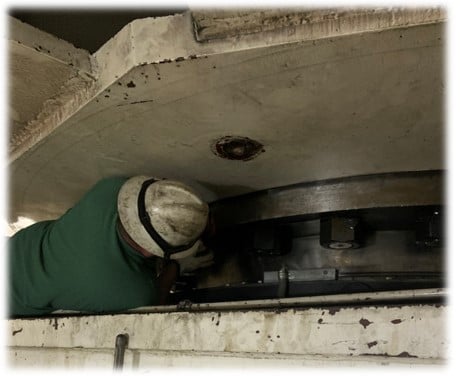
Previous installation technique
After reviewing the installation requirements for this application, our engineers recommended Boltight® provided hydraulic nuts to replace standard hex nuts. These nuts can be connected in series for a simultaneous operation, allowing all bolts in the coupling to be evenly loaded to the same high and accurate preload.
AEP’s initial installation went off without a hitch, reducing the assembly of this coupling from 120 to 40 manhours. Using Boltight hydraulic nuts also significantly reduced high impact movements for its workers. Impressed with the product, ease of installation, and excellent service from the team, AEP is implementing this hydraulic solution within its other plants.
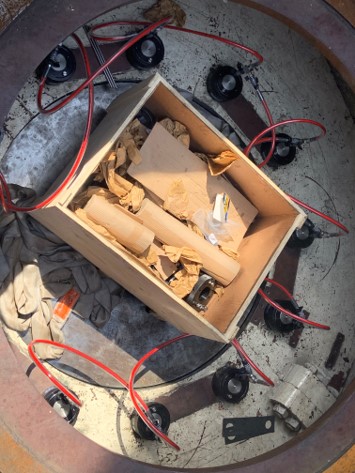
New installation technique using Boltight hydraulic nuts
MORE ABOUT BOLTIGHT
Ideal for permanent replacement, Boltight hydraulic nuts achieve lasting reliability and ensure enduring performance and safety. A hydraulic nut incorporates its own internal hydraulic jack, which enables large diameter bolts to be tensioned to high and accurate preloads. Available in shim, top, or bottom collar configurations, our expert team of engineers can create custom designs to fit your specificity.
Product benefits:
- Quick and easy to install
- Even and accurate preload
- No flogging hammers or spanners
- Single or multiple tightening operation
- Thread damage eliminated
- Improved fatigue performance
- Less stud protrusion required than for standard tensioners
CONCLUSION
American Electric Power operates the Smith Mountain Dam, a hydroelectric pumped storage facility that generates electricity to support peak demand. The dam has five hydroelectrical generators (560 MW capacity), with each generator requiring 36 precise coupling stud installation. Traditional methods were labor-intensive and risky due to cramped workspace and heavy tools. To improve safety and efficiency, AEP adopted Boltight hydraulic nuts, replacing standard hex nuts. Our hydraulic nuts provide reliable, high-preload tensioning. This solution reduced installation time from 120 to 40 manhours, minimized worker strain, and ensured even, accurate bolt loading.