The discipline of bolting solutions approved for defense
Meeting strict military specifications and standards is essential to how the Nord-Lock Group provides a diverse and multifaceted array of products to the industry.
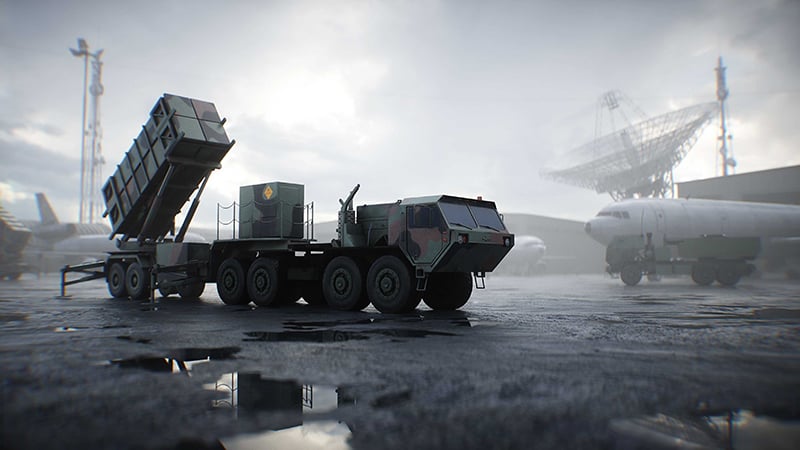
In the defense sector, everyone adheres to rigid structures and protocols of one kind or another.
Even equipment and machinery must be made with near-military rigor. And manufacturers often struggle with the exacting requirements imposed on common components and tooling, like bolting technologies. Some can even find them constraining.
For the Nord-Lock Group, however, aligning with such frameworks to gain necessary approvals and certifications enables versatility and flexibility.
“We're a long-established company within the sector,” explains Andy Radnor, Global Business Development Manager for Defense at the Nord-Lock Group. “We cover pretty much every size of bolted joint that is available, and we have the ability to do a lot of different things.”
Based in England, Radnor admits that while the United Kingdom has a notable place in the global defense industry, the prime market is the United States.
According to Bill Slatosky, Nord-Lock Group’s Head of Sales for North America, the company has decades-long relationship with a cavalcade of industry stakeholders in the US, from original equipment manufacturers (OEMs) to branches of the armed services.
“We've worked with the US Navy and Coast Guard. We've worked with a multitude of defense contractors. We've done a lot of business across land, air, sea, and space – which are the four main categories for the sector,” says Slatosky.
The products that measure up
The core applications for which OEMs and operators in the defense sector use Nord-Lock Group products consist of:
- preventing vibrational loosening with Nord-Lock® wedge-locking washers,
- precisely tightening multiple bolts at the same time with Boltight® hydraulic tensioners,
- overcoming small space restrictions for high-load tightening with SuperBolt®
And each product must meet certain technical specifications and regulatory standards for use as a component in defense or military applications. As Jacob Hice, a data analyst focused on government defense projects at the Nord-Lock Group, explains, the exact parameters depend on the application and tend to vary from project to project.
“It could be anything from certain materials that have to be used to a very extensive 50-page document of criteria or something to do with testing,” he says.
Yet, approval for key specifications and standards can streamline implementation.
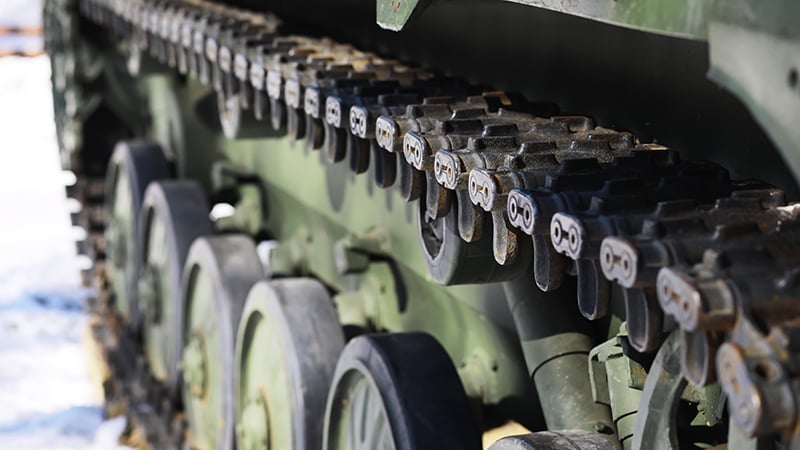
From the Navy to NATO
Out of all the military specifications and standards in the world that the Nord-Lock Group’s products can be approved for, two are the most important.
- DEF STAN 00-35 (Part 3) / Issue 4 – the UK Defence Ministry’s standards for materials used in defense applications to withstand environmental conditions.
- MIL-S-901D – the US military’s specifications to withstand shock testing for shipboard machinery, equipment, systems, and structures.
Nord-Lock® washers have been certified to meet both of them, although Radnor characterizes being approved for MIL-STD as the “big win” for Nord-Lock.
“For the US market, to have that approval is really, really important,” he explains. If you’re accepted in the US, you're going to be accepted elsewhere.”
Radnor also notes that the combined MIL-STD and DEF STAND approval covers many intergovernmental military standards, like those for NATO. As a result, most Nord-Lock® washer designs have a NATO Stock Number (NSN).
Superbolt® tensioners, meanwhile, are also certified to meet MIL-STD-901D as well as NASM 1312-7 – the US national aerospace standard for fasteners under accelerated vibration, like from explosions. What’s more, the US-made Superbolt is approved as a level 1 fastener supplier by the US Navy’s Naval Sea Systems Command (NAVSEA).
“That means Superbolt is an approved supplier for the US Navy,” explains Slatosky, who’s based in the same Pittsburgh location where Superbolt is manufactured. “It could be a nuclear reactor on a submarine or any other critical fasteners.”
Close collaboration and careful customization
The main bulk of the Nord-Lock Group’s defense industry business features customization. Nord-Lock® Washers are (for the most part) standardized components sold through distributors, so the vast majority of customized products for the sector are the company’s tensioning solutions. The most popular being Superbolt®.
But tailor-made components still have to fulfill the necessary criteria for approval and certification.
“If the customer needs us to meet certain military specifications or standards, they'll let us know,” says Hice. “A lot of times that means research, creating a bespoke design, and a lot of testing, whether non-destructive or destructive.”
And this collaborative approach to working with OEMs and operators in the defense sector isn’t limited to customization. Sometimes the right bolting and fastening solution already exists and can be found through consultation.
According to Radnor, the combination of customized and stock products approved for meeting key specifications and standards enables the Nord-Lock Group to provide a level of adaptability unlike any bolting technology company in the defense sector.
“What makes us attractive is that we have multiple solutions to the customer's problems and the ability to be flexible over what we offer,” he explains.


