Bolt loosening and slackening: Settlement, relaxation and creep explained
Bolt loosening is a common challenge for bolted joints, with consequences ranging from reduced performance to catastrophic joint failure in critical applications. But why do bolts loosen in the first place? This article explains how settlement, relaxation and creep cause slackening, how slackening leads to bolt loosening, and Nord-Lock’s solution for a challenging power transmission application.
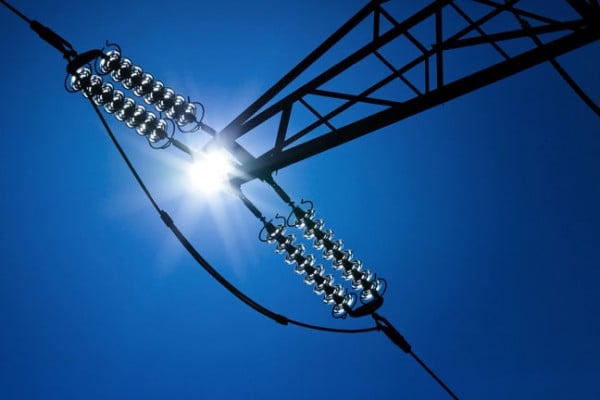
Imagine if a bolt came loose on a crane, resulting in a 10-ton load dropping on passersby on the street below. Or what would happen if slackening of the bolted joint of a conductor on a power transmission line led to a power outage for several days in a large urban area.
Bolts are the crucial components that hold many critical products in our everyday life together. They need to be robust enough to withstand all types of weather conditions, extreme wear and tear, and -- sometimes -- being installed incorrectly. Too often, they must battle all of the above, resulting in the bolt coming loose or slackening. Over time, these miniscule shifts in the bolted joint turn into defects and end up as a costly, time consuming, and, in a worst-case scenario, dangerous situation.
What is slackening in a bolted joint? How settlement and relaxation cause bolt loosening
For years physicists and experts have battled to come up with solutions to combat loosening, relaxation and creep in bolted joints. More recently, they have been investigating the use of bolted joints in heavy industry where there is a risk of bolt loosening due to vibration and dynamic loads from spontaneous movement, such as wind or inconsistent usage.
Two terms, settlement and relaxation, often crop up in issues related to bolt failures. Settlement is the amount of microns lost between the contact surfaces in the joint, for example, the adaptation of the surface roughness. Relaxation is mainly caused by the relaxation of the stressed materials over time. The bolts or the clamped parts might lose their elastic strain, creating a loss of preload into the bolted joint.
The problem is related to the balance between the elongation of the bolt and the loss of compression in the parts. If microns are lost because of settlement then elongation of the bolt is also lost. The challenge for anyone relying on critical bolted joints therefore is to first calculate if there is significant settlement in the joint or not.
If settlement or relaxation has occurred or is likely to occur because of the lack of an adequate secure bolting solution, the next step is to analysis how to fix this problem. In easy-to-access bolted joints the joint can be retightened, but this is time-consuming and only a temporary solution. Many joints however are in locations or applied at a scale where this is not feasible. On top of this, in most cases the issue won’t have become evident until it has escalated significantly.
How creep and poor installation cause bolt loosening: Mosdorfer case study
Innovation Director Wolfgang Troppauer has spent multiple decades at Mosdorfer, one of the world’s leading suppliers of transmission line fittings, damping systems and complete strings for power transmission. He has had first-hand experience of how the combination of creep and poor installation risked jeopardizing power lines. This is one of the reasons why the 300-year-old company takes the problem of creep seriously:
“This phenomenon of loosening bolts did actually occur. What happened was a combination of a simple bolt and washer connection and relatively poor installation work by the linesperson on site, resulting in undue pressure and, in the long term, failure of the bolted joint.”
Creep, especially in conductors, is one of the biggest challenges facing Mosdorfer, which supplies utilities and transmission system operators worldwide with tension and suspension towers, tension strings, fittings from low temperature steel, vibration dampers and roller suspension clamps for low voltage lines. In addition, the quality and means of installation on transmission lines varies dramatically from country to country.
“Generally in Europe, technicians are well-trained and use cable carts to install the damping system on to the conductors, which makes it much easier for them to work,” he explained.
“However, in some other countries, they physically climb onto the conductor bundles and hang 30 to 40 metres in the air. If the bolts are not tightened properly, there’s a real danger that the clamp will loosen and the conductors get damaged or fail completely. There are a lot of cost-saving issues which, at the end of the day, mean a higher risk of the product failing.”
One of Mosdorfer’s core products is spacer dampers which are fixed in bundled configurations to keep conductors at a certain distance from each other on the transmission line, used to dissipate energy within the conductors: “These are really very important products because if you do not dampen the conductors and dissipate the wind induced energy, and, if, in a worst case scenario, they fall down, the line could blackout for hours or even days”.
Why dynamic loads and temperature changes increase the risk of loose bolts
The spacer dampers have bolted clamp connections where the clamp is bolted on to the conductor. The hinged joint is tightened with bolts and nuts. The conductors are usually very dynamic as they tend to vibrate because of wind. If the connection is not robust therefore, there’s a risk that the bolt may come loose.
The conductors are fixed between two towers which are 30-80 meters high; they are weights with static loads which must withstand dramatic temperature differences. At peak times such as lunchtime, the conductors become very warm as a result of the high demand for electricity, while during the night they cool down due to a reduction in the demand for power, as well as cooler evening temperatures. This can mean a temperature difference of 50 to 70-degrees Celsius, resulting in a high-speed creeping process.
Conductor creep, due to constantly changing temperatures, can cause the diameter of the clamp to decrease and lose preload. Creep is also exacerbated by the fact that the conductors are made from aluminum, a relatively cheap, lightweight and high conductivity material with high corrosion resistance.
“In our business we have millions of these bolted connections so for each bolted connection that relaxes, there is a major risk of loosening. If there is too much relaxation and the bolt loosens, this could loosen the clamp from the conductor and the clamp could end up moving on the conductor. Even if it moves by just one millimetre, this will damage the aluminium conductor, which is a very serious issue,” Troppauer noted.
“Digging a bit deeper into this incident, we discovered that to combat creep, the washer would require additional elasticity. We needed to come up with an alternative product that could withstand faults that arose during the installation process, plus extreme weather conditions and heavy loads in such critical applications.”
How Nord-Lock X-series prevent bolt-loosening from slackening
This kind of challenge was an ideal fit for Nord-Lock’s patented X-series washer, which features a unique wedge-effect design combined with a conical form.
X-series washers are specifically designed to not only protect bolted joints from spontaneous loosening but also compensate for loss of preload caused by slackening. The X-series is the result of a goal to design a system that would eliminate all kinds of insecurity in these scenarios.
Beyond vibration and dynamic loads, the X-series resolves a multitude of other challenging application areas where material settlement can occur, such as painted or powder-coated surfaces, soft metals, composites and polymers.
Key takeaways: The different causes of slackening and why they occur
Slackening is loss of preload due to plasticity deformations without any rotary movement, and can cause loosening among other problems. There are three mechanisms that can cause slackening:
- This is caused by plastic deformation of the contact surfaces inside the joint. Settlement changes the length of the clamped members, so the resulting loss of preload can be detected by measuring the length of the bolt.
- Restructuring of the crystal lattice of the materials converting existing elastic deformation into plastic deformation over time. Relaxation does not change the length of the clamped members or bolt, so the resulting loss of preload cannot be detected. Thus, relaxation is critical for a bolted joint.
- Restructuring of the crystal lattice of the materials causing additional plastic deformation over time. Creeping changes the length of the clamped members and bolt. Loss of preload can be detected by measuring the length of the bolt.
In bolted joints, creeping and relaxation occur simultaneously, so both fall under the same category of relaxation, i.e. loss of preload due to plastic deformations from material restructuring over time.
About Mosdorfer
Mosdorfer was founded in 1712 and initially made knives and blades before moving into manufacturing machine parts after World War II. Mosdorfer specialises in parts for overhead transmissions, supplies utility and grid companies, contracting companies and wholesalers worldwide.
The company produces over 30,000 different kinds of overhead transmission line fittings for voltages from 1kV up to 1200 kV. They also make low temperature steel fittings, vibration dampers, and roller suspension clamps for low voltage lines. Mosdorfer has clients worldwide, although they are mainly in Europe, the Far East, India, USA, South America and Canada. The company is located two hours south of Vienna, Austria.
Nord-Lock X-Series: Combining wedge-locking with a conical form for extra stability
Nord-Lock’s patented X-series washer combines the company’s wedge-locking technology, which prevents spontaneous bolt loosening, with a special conical form that protects against slackening caused by settlement and relaxation. This unique combination means the X-series can offer the highest security for critical bolted joints.
As with Nord-Lock original washers, each washer pair has cams on one side and radial teeth on the other to secure the bolted joint through tension instead of friction. The conical shape of the X-series washers also creates an elastic reserve in the bolted joint to compensate for the loss of preload and prevent slackening.
In brief: How Nord-Lock’s wedge-locking works
Upon tightening the fastener, the washers flatten and the serrations engage the contact surfaces. Since the cam angle (α) is greater than the thread pitch (β), the wedge-locking effect will prevent any rotation of the fastener. Directly after tightening, the joint settles and the fastener sinks into the surface material. The washers immediately deflect and the spring effect (Fs) counteracts the slackening movement (ΔL) of the bolt, thereby preventing loss of preload in the joint.
These multiple functions continuously act on the bolted joint to maintain preload and prevent spontaneous bolt loosening, serving as an effective solution for vibration, dynamic loads, settlement and relaxation.


