When to use locking washers, locking plates or wedge-locking washers
Railway logistics plays an essential role in keeping supply chains flowing, so for companies specialising in delivering key components for rail infrastructure, unnecessary maintenance has a huge domino effect that must be avoided. This case study details how Wam Metals eliminated problems caused by locking plates in their railway components by switching to Nord-Lock: a strong example of when to use wedge-locking washers to maximize reliability rather than plates, lock washers or other alternatives.
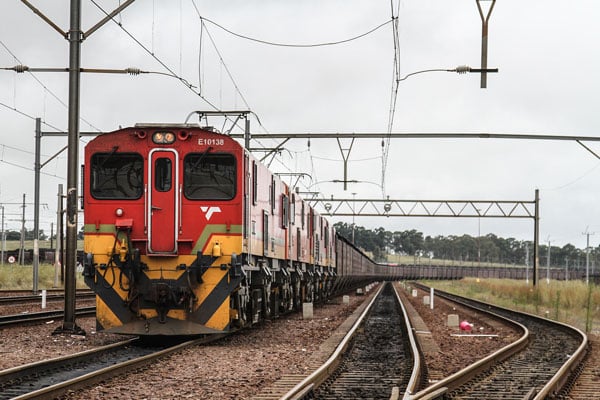
Wam Metals is a manufacturer and supplier of a wide range of specialized non-ferrous and ferrous components, serving both local South African and international markets. The company has a long-standing close relationship with logistics company Transnet’s freight rail division, which specializes in the transportation of freight, mainly through its electrified network.
The challenge: eliminating the inconsistency of locking plates
The contact splice conductors in the installations Wam Metals carried out for Transnet were previously designed to use locking plates to lock the bolts after being tightened. Bad maintenance meant however that numerous incidents occurred, so the method proved not to be foolproof.
Splices had to be tightened and then later-retightened according to the old procedure, and only then could the locking plate be bent to lock the bolts. But as the incidents showed, the plates were usually left intact. Because of this, vibration in the overhead line led to bolts loosening and contact wires being pulled out of splice.
When to use locking plates, lock washers or wedge-locking washers? For railway applications, wedge-locking is the solution
The occurrences of bolts loosening showed that the locking plates were not fulfilling their purpose, so which alternative option would perform better? Standard lock washers, which rely on friction to function, are not reliable when subjected to vibration and would therefore be unsuitable for this railway application. Wedge-locking washers, with a track record of preventing unintentional loosening in high vibration environments like railways, are a clear fit.
Wam Metals requested approval from Transnet’s engineering department in April 2014 to change its specifications and start using stainless steel Nord-Lock washers instead of the locking plates. Extensive tests were carried out, with the Nord-Lock washers performing as they should. With no slip occurring, Transet approved the use of the Nord-Lock washers instead of the locking plats that had underperformed previously.
The result: wedge-locking washers outperform locking plates and deliver consistency
With no incidents of hook-ups caused by contact splices fitted with Nord-Lock washers reported, the implementation was a success.
Wam Metals uses Nod-Lock X-Series (NLX10) for the signal bonds. They also use stainless steel Nord-Lock Original washers in two sizes: NL10ss for 107mm² contact splices, and NL12ss for 161mm² contact splices and rail and mast bonds.
The outcome: reduced maintenance and a strong example of how Nord-Lock washers excel in railway applications
For Warm Metals, the use of Nord-Lock washers on the contact splices has eliminated the need to re-tighten them at a later stage, simplifying installation. The same applies to their signal, rail and mast bonds, translating to reduced maintenance costs and fewer hook-up incidents.
Working with Wam Metals has also been a highly rewarding experience for Nord-Lock, providing a great opportunity to demonstrate the extra security our X-Series washers can provide in railway applications while also being simple to install.
KEY TAKEAWAYSUse case:
Replacing locking plates with X-series wedge-locking washers for improved performance
Client:
Wam Metals
Location:
South Africa
Benefits gained:
• Eliminated bolted joint failure caused in previous locking plate solution for signal bonds
• Simplified installation
• Reduced need for maintenance


