Reliable railway fastening for critical applications
Reliable bolted joints is a non-negotiable for railways. From securing switches and bridges, to fastening thousands of railway sleepers and masts: Nord-Lock washers play a pivotal role in the daily performance of major rail infrastructure. This rail industry case study explores how our wedge-locking washers make the difference for many key railway components.
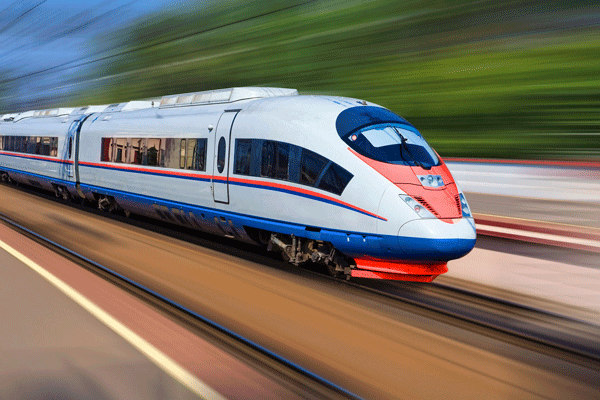
Starting with rolling stock almost 30 years ago, Nord-Lock wedge-locking washers can now be found in all safety-related areas of the railway industry. Ranging from bogies to coupling devices, brake systems to rail dampeners, or housing to railway sleeper fasteners – our wedge-locking washers secure critical bolted joints in railways to benefit safety, uptime, maintenance and more.
From switches to iconic landmarks – reliable railway fastening has a massive impact
Even at the highest level of vibration caused by rail traffic, Nord-Lock washers ensure the functionality of bolted joints. Their suitability for these critical applications is underscored by the awarding of the CE marking to eight of our washer series, following careful testing of their ability to meet rigorous standards.
One area where reliable fastening has big consequences for large volumes of people is in railways switches. Highly complex structures that must be used as long as possible with minimal maintenance, they are often exposed to both the elements and considerable stress. Switch failure can cause delays, loss of revenue, compensation claims, or even serious injury.
Removing switches from usage for maintenance has a direct effect on network capacity too, so maximizing their uptime is essential. Regularity and quality of service is ultimately a top factor in shaping perceptions of a railways operator’s reputation, so while the washers themselves may be relatively small, in switching, their impact is huge. Our wedge-locking washers ensure that impact is a positive one, removing unnecessary worry from the equation.
Helping to build trust in railway performance is nothing new for Nord-Lock washers. For well over a decade they have secured the railway sleeper fasteners at one of Germany’s most iconic stretches of infrastructure. Along with the towering Kölner Dom cathedral, Cologne’s mammoth Hohenzollern Bridge is the city’s most recognizable landmark, where tourists hang padlocks in declarations of love while busy train traffic zooms past them towards the central station. Beneath them, Nord-Lock washers quietly play their part maintaining the bridge’s functionality.
Under the constant flow of trains – 1,200 per day to be precise – the railway bridge’s sleepers are secured by Nord-lock washers. Holding a total of 1,346 steel beam sleepers in place, they play an important role in keeping traffic rolling at Germany’s busiest rail bridge, where efficiency and speed is of the essence.
Securing railway fasteners for masts, walls and other critical rail infrastructure
But what about when speed must be balanced with the ability to support heavy loads? In these scenarios, Nord-Lock steel construction washers (NLSC) can play an important role in helping railway companies to avoid unnecessary operational downtime and reduce costs. A typical case is the renovation or replacement of old railway bridges, where small temporary bridges are often assembled on site with a bolt preload of 100 percent to achieve secure bolted joints. These bolt connections can only be used once – Nord-Lock washers help to maintain their stability even under repeated train loads and the fluctuating vibrations caused.
This challenge doesn’t only apply to temporary structures. Overhead line masts and signal masts, key to the operation of any railway, must also cope with severe dynamic loads caused by passing trains. With masts typically placed around every 60 meters on straight stretches (and closer together in curves or other special areas), the volume of masts in operation is a significant variable for any rail line. Reliable bolted connections are once again crucial to reducing maintenance costs in this area therefore. With their special geometry, Nord-Lock X-series washers increase security of bolted joints with a short clamp length as is typical for rail masts, and also boosts the security of commonly used softer metals like structural steel, which are susceptible to relaxation.
This extra security is one reason why Germany’s national railways company Deutsche Bahn uses Nord-Lock X-series washers to help secure their noise-absorbing walls, the installation of which is part of their sustainability strategy to reduce rail noise for more than 800,000 residents living near German railway lines. That translates to around 3,000 km of noise-absorbing walls to be installed by 2030, all of which must cope with extreme vibrations from passing trains. A combination of concrete bolts and the X-series washers effectively attach the noise-absorbing barriers to existing bridge decks, even though these decks were not originally designed for noise barriers to be placed on them. It’s a both pragmatic and reliable solution that makes a big difference at scale.


